
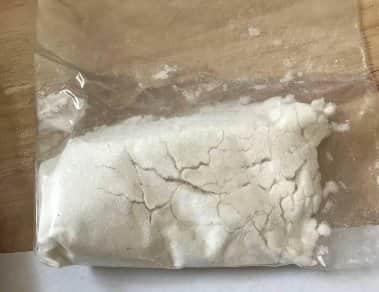
Description
Buy 3-HO-PCP Online Discreet & Securely
3-Hydroxyphencyclidine (commonly known as 3-HO-PCP) is a novel dissociative substance of the arylcyclohexylamine class that produces potent dissociative, hallucinogenic, and euphoric effects when administered.
In addition to its primary activity as an NMDA receptor antagonist, it has been found to have an appreciable affinity for the μ-opioid receptor.
It was first synthesized in 1978 to investigate the structure-activity relationship of phencyclidine (PCP) derivatives.
It was further explored alongside PCP in the 1980s, where it was discovered to possess μ-opioid agonist activity in animal models.
Chemistry & Background Information
The structure of 3-Hydroxyphencyclidine consists of cyclohexane. It’s a six-membered saturated ring. It consists of a piperidine ring and an aromatic phenyl ring. It was further explored together with phencyclidine in the 1980s. Researchers discovered that it possesses μ-opioid agonists.
Like other substances in the arylcyclohexylamine class, particularly methoxetamine, phencyclidine, and 3-MeO-PCE, 3-HO-PCP is referred to as “dissociative anesthesia”, albeit the extent to which this occurs has been reported to be highly dose-dependent and variable in its research outcomes.
Chemical Formula:
Product Name: 3-HO-PCP
Other Name(s): 3-Hydroxyphencyclidine; PCP-3-OH
IUPAC Name: 1-[1-(3-hydroxyphenyl)cyclohexyl]-piperidine hydrochloride
CAS: 79787-43-2
Molar Mass: 295.9 g/mol
Purity: 99,8% and above
3-HO-PCP chemical formula
Side Effects of 3-HO-PCP:
Like other substances of its class, particularly methoxetamine (MXE), phencyclidine (PCP), and 3-MeO-PCE, it is known to primarily induce a state referred to as “dissociative anesthesia”, albeit the extent to which this occurs has been reported to be highly dose-dependent and variable in its effects.
It is unknown whether the studied opioid properties in animal models apply to humans, with some early reports suggesting that it does not.
There are also reports that suggest this compound may produce more physical side effects such as muscle soreness and flu-like symptoms during or shortly after administration.
This suggests it may be uniquely more dangerous or toxic than related dissociatives, particularly at higher doses.
Today, it is almost exclusively distributed as a gray area research chemical by online vendors.
Extremely little is known about its pharmacology, metabolism, and toxicity in humans.
Due to its sensitive dose-response, potential habit-forming properties, as well as unknown toxicity profile, it is strongly recommended that one use proper harm reduction practices if choosing to use this substance.
The physiological and toxicological properties of this compound are not known.
This product is intended for forensic and research applications.
There are also reports that suggest this compound may produce more physical side effects such as muscle soreness and flu-like symptoms during or shortly after administration.
This suggests it may be uniquely more dangerous or toxic than related dissociatives, particularly at higher doses.
This product is strictly for laboratory use only and is not approved for human consumption. Any mention of dosage/feeding to humans or animals or anything consumption-related is not acceptable.


Reviews
There are no reviews yet.